Dean's Speaker Series | Aravind Srinivas, PhD 21 (Comp. Sci.) | CEO & Cofounder, Perplexity
Key ideas
Srinivas treats research as training for founding, argues for shipping imperfect products ahead of the models, and says a CEO must always name the number one problem.
From a machine transcript of the audio. Quotes link to the moment they are said.
- 1
Research already trains you for startups
Srinivas says both start from a contrarian insight and require raising money, recruiting people, marketing the work and building a line of iterations on it. He treats the long stretch of suffering before any reward as the strongest link, and says academia prepared him well for that.
- 2
Ship at 80% and build ahead
Srinivas argues AI products should launch when about 80% of the product works, leaving a long tail that doesn't, since below that no one stays and the rest improves as models do. He says Perplexity began work on its Comet browser a year before launch, betting that reasoning models would catch up, and that starting later would have been too late.
- 3
Build on what users will always want
Crediting the idea to Bezos, Srinivas asks what will not change and lists speed, accuracy, a delightful interface and products that work with a user's personal context. He says those are the areas Perplexity will work on for the next five years.
- 4
Always name the one top problem
Srinivas says he once wanted to fix every problem right away, an instinct he still has and finds helpful, but has learned to let some sit. When he asks people for their top priority they often list five or ten items, and he calls picking the first one the most important skill for a CEO or founder, while noting that doing only one thing is not enough in a fast-moving field.
- 5
Watch enjoyment, not hours, for burnout
Asked how his team keeps pace, Srinivas says people cannot compound like a machine, so he points them to harder projects and slightly different work when they get bored. He links burnout more to not enjoying heavy work than to the hours themselves, and says winning metrics help people keep going.
In Aravind’s words
“You have to build imperfect products, not perfect products. You have to build products that kind of like 80% work. It cannot be 60% because no one's going to use it.”
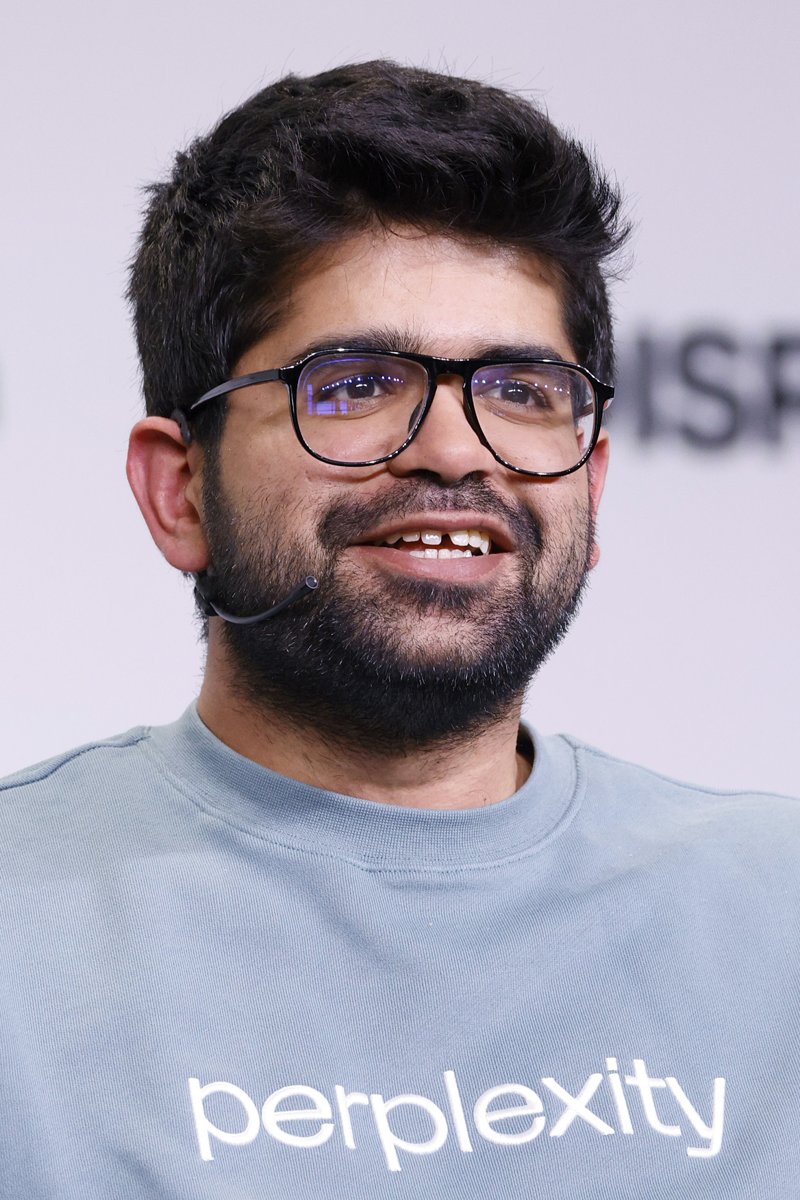 Aravind Srinivas·Dean's Speaker Series | Aravind Srinivas, PhD 21 (Comp. Sci.) | CEO & Cofounder, Perplexity·Watch at 9:39(opens the original in a new tab)
“I used to think every problem just needs to be fixed instantly. And as a company has scaled, I have learned to make peace with some problems just existing.”
Aravind Srinivas·Dean's Speaker Series | Aravind Srinivas, PhD 21 (Comp. Sci.) | CEO & Cofounder, Perplexity·Watch at 31:12(opens the original in a new tab)“Burnout usually comes when you're not enjoying the work you do, but you're actually having to do a lot of it.”
Aravind Srinivas·Dean's Speaker Series | Aravind Srinivas, PhD 21 (Comp. Sci.) | CEO & Cofounder, Perplexity·Watch at 23:27(opens the original in a new tab)About this entry
- Published
- Oct 10, 2025
- Channel
- UC Berkeley Haas
- Type
- Video
- Length
- 48:50
- Language
- English
- Added
- Nov 2, 2026
- Source last checked
- Nov 2, 2026
What’s available here
Original source
Linked. Opens on YouTube.
Player on this page
Available. YouTube’s own player, loaded only when you press play.
Full text or transcript
Not reviewed. No license to show a text version here.
Our summary
Draft. Written by us with AI from a machine transcript of the video’s audio (Whisper) and checked against it. Machine transcripts can mishear; each quote links to the moment so you can hear it. Not yet rights-reviewed.
Ask questions with AI
Not reviewed. Off until there is licensed text to work from.