View From The Top with Aravind Srinivas, Cofounder and CEO of Perplexity
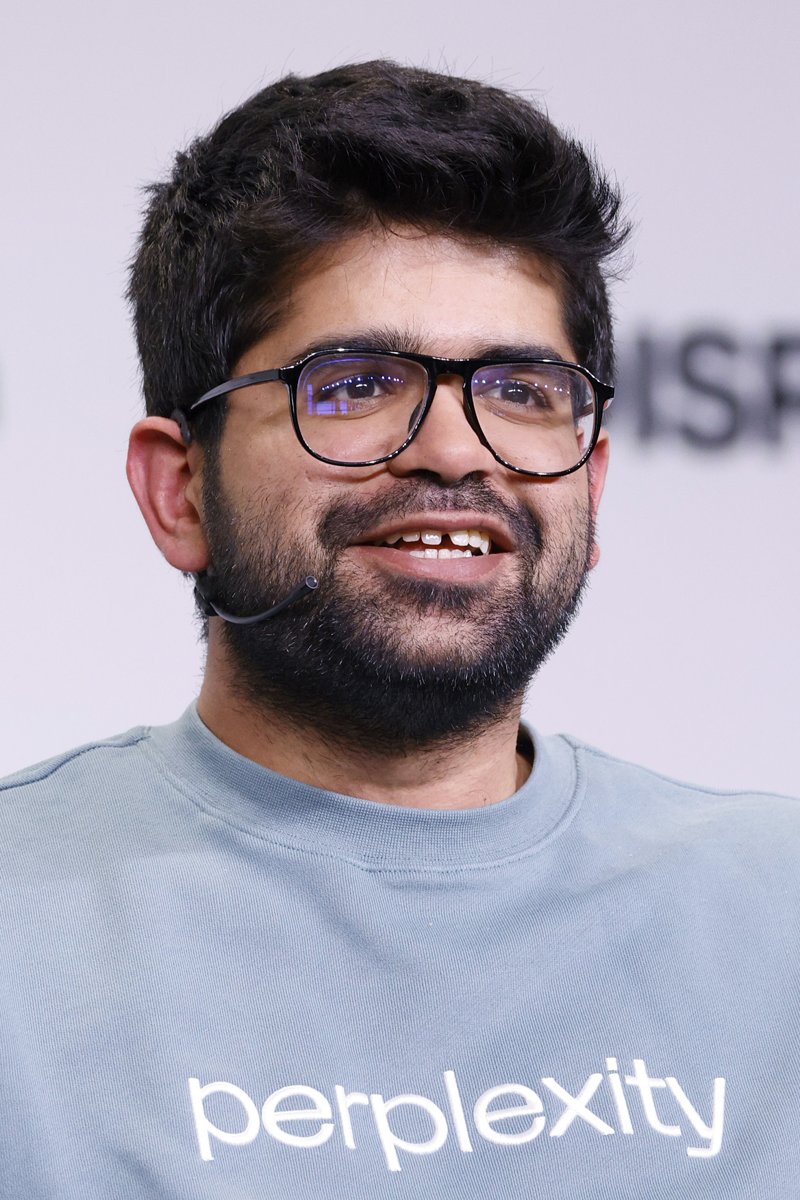 Aravind SrinivasSpeaker
- Aislin RothHost
Key ideas
Srinivas explains how academic citation habits shaped Perplexity, why he hires unproven people, pitches with working links instead of decks, and builds on other companies' models.
From a machine transcript of the audio. Quotes link to the moment they are said.
- 1
Turn a habit from your field into product
Srinivas says Perplexity's citations came from his PhD, where he learned that an academic claim without a source reads as opinion. The team asked what would happen if an AI answered the way an academic writes, with each sentence tied to a web source, and built that into the prompt.
- 2
Hire people who multiply the team
Srinivas looks for co-founders and early hires whose skills exceed and complement his own, and describes the effect as additive as well as multiplicative. He says he avoids recruiting the best-known expert from a big consumer company, preferring talented people who have not yet had a first big hit, because he has seen that most people struggle to push themselves for a second success.
- 3
Send a working link, not a deck
Srinivas recounts investors, among them Jan LeCun, Karpathy and Jeff Dean, being persuaded by trying the product themselves. He says he is not good at decks, so he avoids them and writes memos or Notion documents for later rounds, and he warns that the link has to actually work.
- 4
Use others' models unless you raise billions
Srinivas says Perplexity bet that models would commoditize and that training them only makes sense with very large funding, which he puts at around $10 billion. He argues that falling API prices, with open source keeping pressure on closed models, left plenty for an application company to build outside the model, such as post-training, referencing, formatting and vertical interfaces.
- 5
Keep ads out of the answer
Srinivas criticizes Google for letting advertisers influence the same links that serve as its answers. Perplexity's experiment instead sells a sponsored suggested follow-up question and leaves the answer uninfluenced, and he says this means lower margins and an unclear return for brands at this early stage.
In Aravind’s words
“I've actually tried to hire people with some chips on their shoulders who are very talented, but they have not had their first major hit yet.”
Aravind Srinivas·View From The Top with Aravind Srinivas, Cofounder and CEO of Perplexity·Watch at 36:14(opens the original in a new tab)“If you're not good at making decks, don't try to do it. And I wasn't good at it. So instead, just make sure there is a link that they can actually use or try instantly.”
Aravind Srinivas·View From The Top with Aravind Srinivas, Cofounder and CEO of Perplexity·Watch at 18:06(opens the original in a new tab)“The cost of the API is going down 2X every four months. So assume that trend continues for another year or two, we are at least going to ride the wave of 10 to 100X reduction in the cost for the same intelligence”
Aravind Srinivas·View From The Top with Aravind Srinivas, Cofounder and CEO of Perplexity·Watch at 22:12(opens the original in a new tab)About this entry
- Published
- Dec 2, 2024
- Channel
- Stanford Graduate School of Business
- Type
- Video
- Length
- 52:09
- Language
- English
- Added
- Nov 2, 2026
- Source last checked
- Nov 2, 2026
What’s available here
Original source
Linked. Opens on YouTube.
Player on this page
Available. YouTube’s own player, loaded only when you press play.
Full text or transcript
Not reviewed. No license to show a text version here.
Our summary
Draft. Written by us with AI from a machine transcript of the video’s audio (Whisper) and checked against it. Machine transcripts can mishear; each quote links to the moment so you can hear it. Not yet rights-reviewed.
Ask questions with AI
Not reviewed. Off until there is licensed text to work from.