Big ideas begin here: Sergey Brin at Stanford
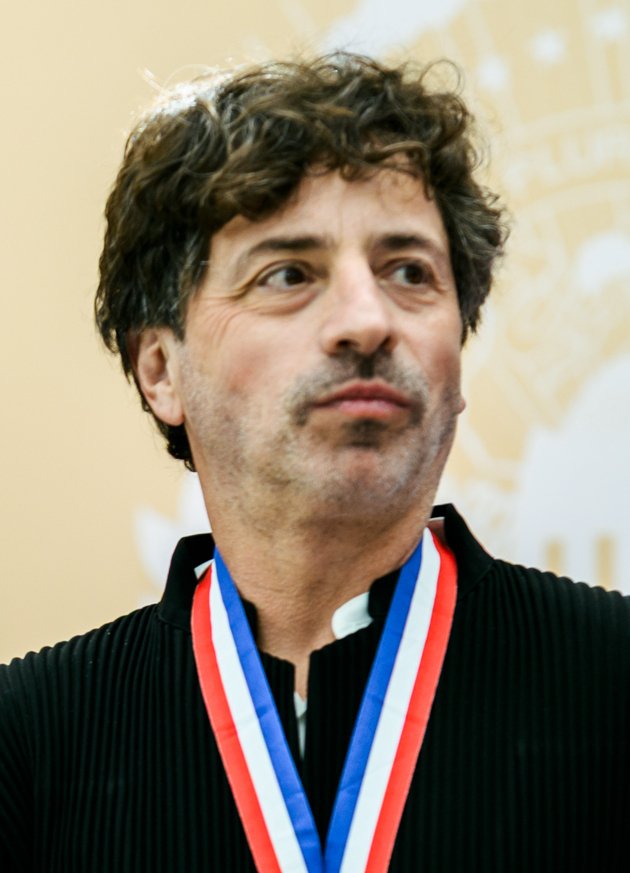 Sergey BrinSpeaker
- Jonathan LevinHost
- Jennifer WidomHost
Key ideas
Brin reflects on Google's academic roots and AI missteps, saying deep technical work paid off partly by luck, warning against rushing ideas out, and seeing AI as extending individual ability.
From a machine transcript of the audio. Quotes link to the moment they are said.
- 1
Google began as a Stanford experiment
Brin says he and Larry Page spent a while treating their search work as a Stanford project and tried to license it to internet companies before deciding that scaling it needed real money. He says his parents were disappointed when he left the PhD program, but his advisor suggested he try it and come back if it failed. He jokes that he is still technically on leave.
- 2
Hard technical work paid off, partly by luck
Brin suggests Google's academic roots may have made it more inclined to attempt hard things, and agrees it hired many PhDs. He argues that deep technical work has become more valuable over the last decade, citing the computing and math behind AI, and calls this partly luck. He also says Google has had a long list of failures, and that part of innovating is simply trying.
- 3
Bake the idea before expectations build
Asked which mistakes to avoid, Brin points to Google Glass, which he says he tried to commercialize too quickly, before it was cost-effective and polished enough. His warning is that once outside expectations and expenses start rising you are committed to a deadline that may not leave enough time to do the work.
- 4
Google sat on its own breakthrough
Brin says Google underinvested after publishing the Transformer paper, failing to scale compute and fearing to release chatbots because they say dumb things, while OpenAI moved ahead. He says Google still benefited from research, chips and data centers built over many years, and from trusting technical people such as Jeff Dean.
- 5
Use AI, but stay the judge
Brin says he turns to AI constantly for ideas and for a decent overview of unfamiliar fields, but that it is sometimes dumb enough that you end up supervising it. He says he would not avoid computer science because AI can code, and thinks it is too hard to forecast how careers will change. His overall view is that AI can greatly improve what an individual can do.
In Sergey’s words
“You kind of get this snowball, I guess, of expectations that happens and you don't give yourself all the time you need to process them.”
Sergey Brin·Big ideas begin here: Sergey Brin at Stanford·Watch at 52:56(opens the original in a new tab)“We for sure messed up in that we underinvested and sort of didn't take it as seriously as we should have, say, eight years ago when we published the Transformer paper.”
Sergey Brin·Big ideas begin here: Sergey Brin at Stanford·Watch at 28:17(opens the original in a new tab)“Give me five ideas, blah, blah, blah. And, you know, probably three of them are going to be junk in some way that I'll just be able to tell. But two will have some grain of brilliance”
Sergey Brin·Big ideas begin here: Sergey Brin at Stanford·Watch at 37:27(opens the original in a new tab)About this entry
- Published
- Dec 12, 2025
- Channel
- Stanford University School of Engineering
- Type
- Video
- Length
- 1:10:30
- Language
- English
- Added
- Nov 2, 2026
- Source last checked
- Nov 2, 2026
What’s available here
Original source
Linked. Opens on YouTube.
Player on this page
Available. YouTube’s own player, loaded only when you press play.
Full text or transcript
Not reviewed. No license to show a text version here.
Our summary
Draft. Written by us with AI from a machine transcript of the video’s audio (Whisper) and checked against it. Machine transcripts can mishear; each quote links to the moment so you can hear it. Not yet rights-reviewed.
Ask questions with AI
Not reviewed. Off until there is licensed text to work from.